Camphor Storksbill
Pelargonium betulinum
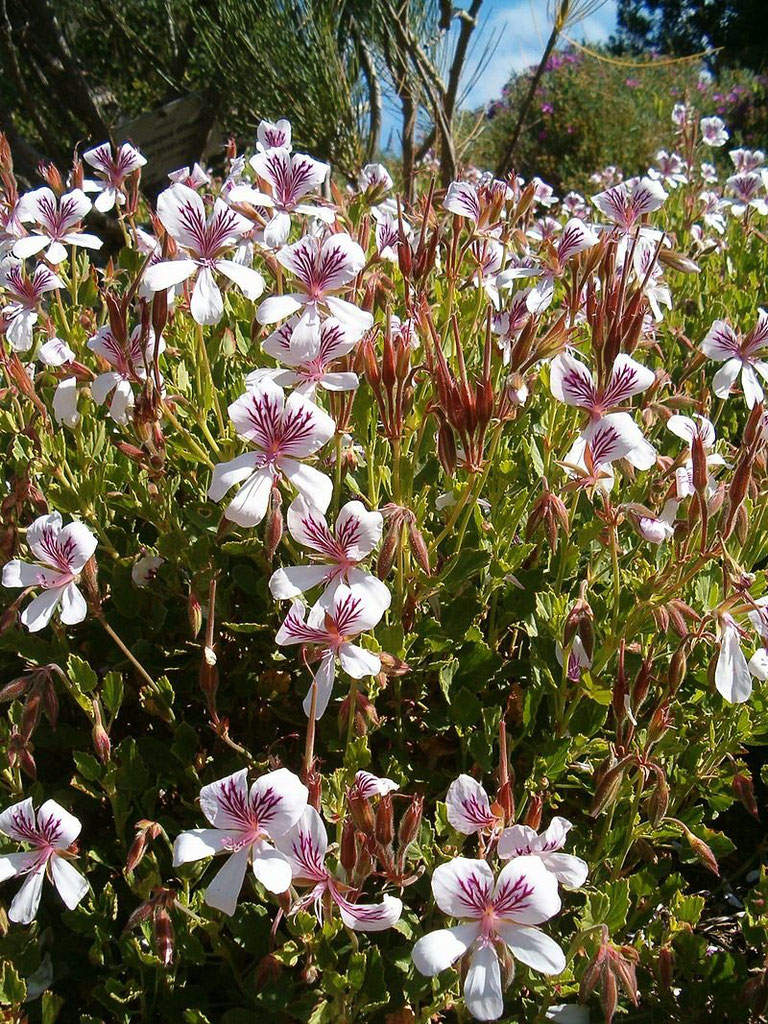 © (None)
Description
No description available.
Read more here
Species Characteristics
Wildlife supported
Bees
Bees
Tolerances & suitability
Drought-resistant
Drought-resistant
Good for coastal areas
Good for coastal areas
Good potplant
Good potplant
Wind-resistant
Wind-resistant
Growth features
Easy to grow
Easy to grow
Fast-growing
Fast-growing
Social features
Aspect
Semi-shade
Semi-shade
Sun
Sun
Succession
Pioneer species
Pioneer species
Soils
Flowering Period
- Pink
- Purple
- White
Sep
Oct
Nov
Dec
Propagation
By Seed
Seed should be sown at a depth of 2-3 mm in late summer to autumn (February to March) in a well-drained sandy loam. Germination should occur in 1-3 weeks with percentage germination of ±75%. Remember that plants grown from seed will show some degree of variation and, if a particular form or variant is required, it must be propagated vegetatively.
By Cutting
Propagation is by cuttings or seed. This species is readily propagated from softwood and tip cuttings taken from healthy young growth in autumn (March to May). The cuttings should be left to dry in a cool spot for a few hours. The basal ends should be dipped in a rooting hormone, and inserted into a prepared hole made by a dibber or a nail to avoid damaging the ends. The cuttings should be rooted in a cold frame, in a well-drained medium, such as coarse river sand. The first watering should contain a fungicide or agricultural disinfectant — for example a.i. benomyl (Benlate)/copper oxychloride/captab (Kaptan)/didecyl dimethyl ammonium chloride (Sporekill)) — after which the cuttings should be watered regularly but not excessively. Rooting should occur in 4 to 8 weeks and a weaning period of 1 week is recommended. The newly rooted cuttings can be fed with a seaweed-based fertilizer and potted up after they have been weaned.
Nursery availability
No nursery stock found.