Fynbos Corridor Collaboration

Bietou

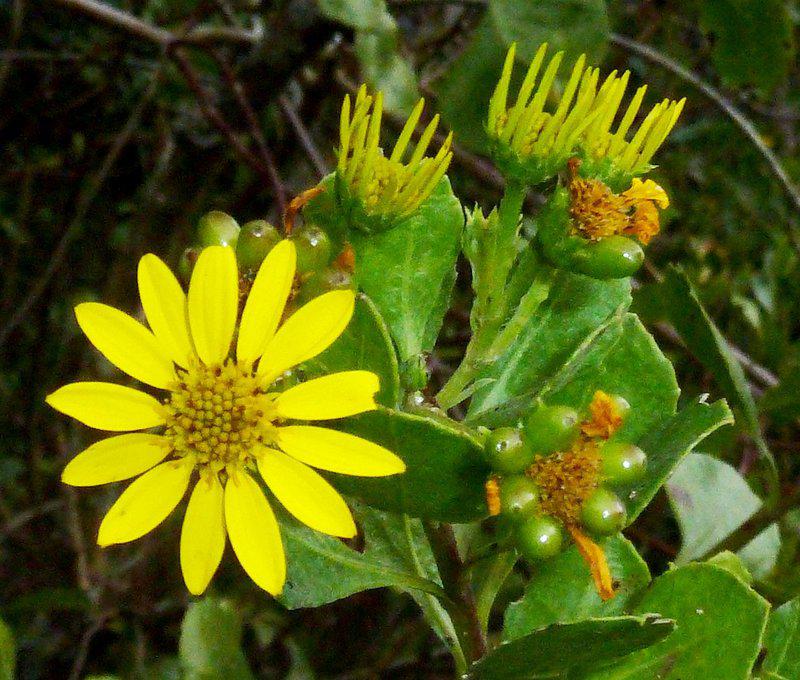
Osteospermum moniliferum

Animal-friendly

Supports monkey beetles Supports monkey beetles
Supports birds Supports birds
Supports butterflies Supports butterflies
Supports bees Supports bees

Tolerances & suitability

Drought-resistant Drought-resistant
Good for coastal areas Good for coastal areas

Growth features

Easy to grow Easy to grow

Social features

Useful Useful
Medicinal Medicinal
Edible Edible
Attractive Attractive

Aspect

Sun Sun

Plant types

Shrub Shrub

Succession

Pioneer species Pioneer species

Flowering

  • yellow
Mar Apr May Jun Jul Aug

This is a daisy perennial, woody, upright shrub, growing to 3 m. Fruit are berry-like dark brown or black.

In mismanaged Cape Flats Sand Fynbos, this species along with Carpobrotus edulis replaces the diversity of species.

"According to Smith in his Common Names of South African Plants (1966) bietou fruit was formerly used by the Khoi and San as a food source. Other uses an infusion of the leaves as an enema to treat fevers (Coates Palgrave)."

"The bietou is easily grown and makes an attractive garden asset and especially useful pioneer shrub for the new garden. It makes a striking combination grown with white blombos (Metalasia muricata) and krantz aloe (Aloe arborescens). Ample compost annually during winter or spring will enhance growth and performance. Bietou is relatively pest free and an asset to any garden."

Also known as Chrysanthemoides monilifera and Osteospermum subcanescens

Propagation by seed

"Seed germinates with some difficulty and needs scarification (mechanical or chemical). Plant seed in sandy, well drained soil and sow in spring. The seedlings are fast growing and should be transplanted to small containers when large enough to handle."

Propagation by cutting

"The bietou is easily grown and makes an attractive garden asset and especially useful pioneer shrub for the new garden. It thrives well in strandveld, fynbos, seafront and grassland gardens. It is a rapid grower, requires a sunny, well-drained position and sufficient space. "

Sources and references

Start planning your restoration garden