 By Urban (Own work) [Public domain], via Wikimedia Commons (https://upload.wikimedia.org/wikipedia/commons/a/aa/Leonotis_leonorus10.jpg)
Common Lionspaw
Leonotis leonurus
Animal-friendly
Aspect
Succession
Flowering
- cream
- orange
- white
- yellow
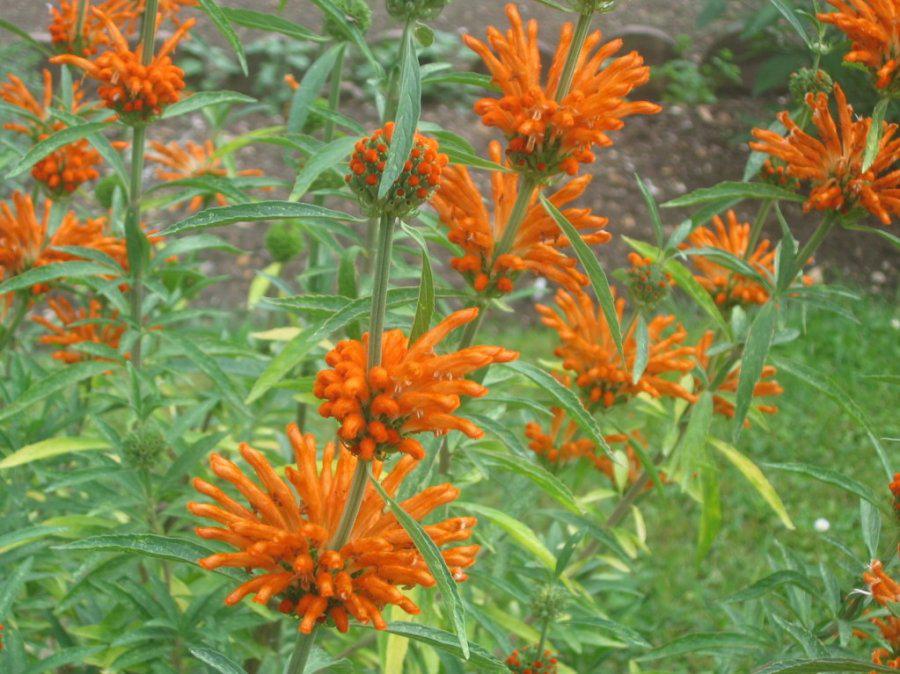
The medium-dark green long leaves are aromatic when crushed. The plant has tubular orange flowers in tiered whorls, typical to the mint family, that encircle the square stems. They rise above the foliage mass during the summer season, with flowering continuing into winter in warmer climates.
This plant attracts nectivorous birds (mainly sunbirds), as well as ants who take the seeds away and the Bush Bronze butterfly caterpillar feed on this plant. The flowers' mainly orange to orange-red colour and tubular shape are indicative of its co-evolution with African sunbirds, which have curved bills suited to feeding from tubular flowers.
Traditional uses
The infusions made from flowers and seeds, leaves or stems are widely used to treat tuberculosis, jaundice, muscle cramps, high blood pressure, diabetes, viral hepatitis, dysentery, and diarrhoea. The leaves, roots and bark are used as an emetic for snakebites, bee and scorpion stings. The fresh stem juice is used as an infusion drunk for 'blood impurity' in some places of South Africa.
Other names include Umfinafincane