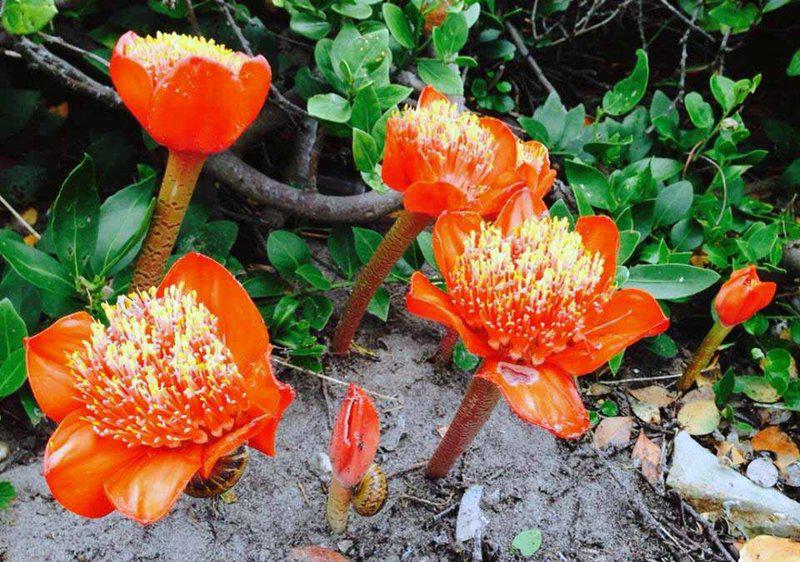
 Gertrude Smith (https://commons.wikimedia.org/wiki/Category:Haemanthus_coccineus#/media/File:Haemanthus_coccineus13.jpg)
Spotted Bloodlily
Haemanthus coccineus
Tolerances & suitability
Growth features
Plant types
Flowering
- orange
- red
- yellow
Haemanthus coccineus is widespread throughout the winter rainfall region in Southern Africa - from the southern parts of Namibia, to South Africa in the Cape Peninsula, to the Keiskamma River in the Eastern Cape.
The flowerheads of Haemanthus coccineus emerge between February and April, with scarlet spathe valves on them like bright shaving brushes, make it a striking plant. The flowers are soon followed by translucent, fleshy berries. There are usually two large leaves per bulb, and occasionally three, which appear after flowering.
Bulb extracts are used for the treatment of internal wounds and for the treatment of broken bones, sprained ankles and other joint issues (Sustainable Livelihoods Foundation. 2015. The Wild Harvesting of Plant Medicines in Cape Town.)