African flag
Chasmanthe floribunda
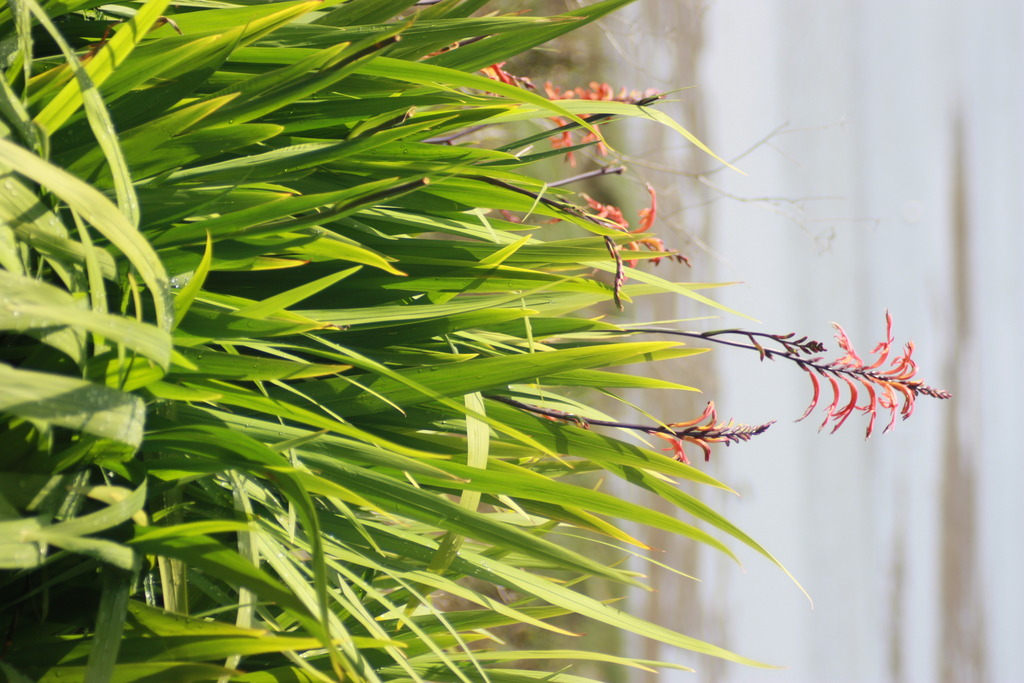 © (c) Chris Brown, some rights reserved (CC BY-NC), uploaded by Chris Brown (CC-BY-NC)
Description - from Wikipedia
Chasmanthe floribunda is a species of flowering plant in the iris family which is known by the common name African flag. This plant is endemic to Cape Province in South Africa, but it has been introduced to other areas of similar climate, and is considered to be naturalized in California, Algeria, Australia, Argentina, and St. Helena.
Chasmanthe floribunda is a perennial herbaceous plant sprouting from a corm and producing clumps of long, narrow leaves. It erects one thin, tall stem which may approach a meter in height. Atop the stem is a spike inflorescence holding 20 to 40 flowers in neat vertical rows. The flower is a curving tube with a long upper lobe curving down over smaller lobes. From the mouth of the flower protrude the stamens with their large, hanging anthers, and the style. The flower is generally bright orange-red or scarlet on the upper lobe and yellow to orange in the lower lobes.
Chasmanthe emerges from the ground in autumn in the Western Cape, South Africa, after the first winter rains. It is frequented by sunbirds, which feed on the nectar it provides at this time of year. It flourishes and flowers in both sun and shade.
Varieties
Chasmanthe floribunda var. duckittii G.J.Lewis ex L.Bolus
Chasmanthe floribunda var. floribunda – Yellow cobra lily
References
External links
Jepson Manual Treatment
USDA Plants Profile
Photo gallery
Read more here
Species Characteristics
Tolerances & suitability
Growth features
Social features
Aspect
Plant types
Soils
- Orange
- Yellow
Propagation
By Seed
Plants do best in light shade or full sun, but higher temperatures induce dormancy, and the species is thus not suitable for tropical conditions.
It thrives in any soil.
The dead leaves should be cut down in early summer.