Cape honey flower
Melianthus major
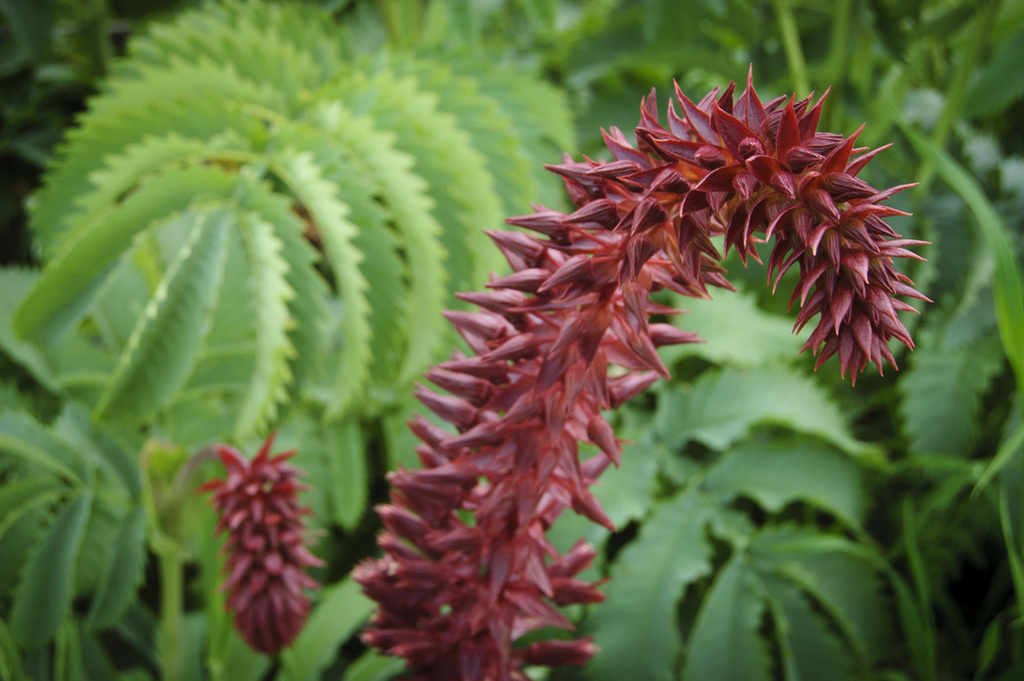 © (c) Oswald Kurten, some rights reserved (CC BY-NC), uploaded by Oswald Kurten (CC-BY-NC)
Description - from Wikipedia
Melianthus major, the giant honey flower or kruidjie-roer-my-nie (Afrikaans for 'herb-touch-me-not'), is a species of flowering plant in the family Francoaceae. It is an evergreen suckering shrub, endemic to South Africa and naturalised in India, Australia and New Zealand. It grows to 2–3 m (7–10 ft) tall by 1–3 m (3–10 ft) wide, with pinnate blue-green leaves 30–50 cm (12–20 in) long, which have a distinctive musky odour. Dark red, nectar-laden flower spikes, 30–80 cm (12–31 in) in length, appear in spring, followed by green pods. All parts of the plants are poisonous.
The Latin binomial Melianthus major literally means "large honey flower". The plant is also sometimes called honeybush (along with many other plants).
In cultivation this plant requires a sheltered location and may also need a protective winter mulch in temperate regions. It has gained the Royal Horticultural Society's Award of Garden Merit.
See also
Melianthus comosus, the honey flower
References
Media related to Melianthus major at Wikimedia Commons
Read more here
Species Characteristics
Growth features
Social features
Habitats
Aspect
Plant types
Soils
- Brown
- Purple
Propagation
By Seed
The seed is sown in autumn in seed trays filled with a well-drained medium and covered lightly with sand or finely milled bark.
Germination is usually within a month.
The young seedlings are potted up into bags or small pots and grown on until strong enough to be planted out into the garden.
It prefers a warm, well-watered, sunny position, with good drainage.
Although quite tough and adaptable, it will flourish in deep, rich soil, especially if given plenty of water.
Melianthus grows fast and will make a show within a few months.
Make sure to give it enough room to spread.
During the dry summers or whenever the plants are untidy, they should be cut back hard, to encourage new growth.
The plants can survive in cold areas with frost, sending new shoots from the base in spring.
By Cutting
The cuttings can be made any time of the year depending on material available.
Cuttings are made from the new shoots sprouting from the base.