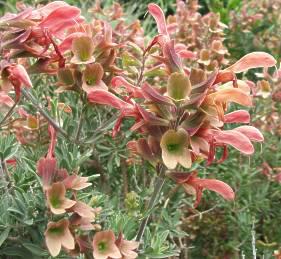
Lanceleaf Sage
Salvia lanceolata
Animal-friendly
Supports birds
Supports birds
Supports sunbirds
Supports sunbirds
Supports bees
Supports bees
Growth features
Easy to grow
Easy to grow
Social features
Useful
Useful
Medicinal
Medicinal
Edible
Edible
Attractive
Attractive
Fragrant
Fragrant
Aspect
Sun
Sun
Plant types
Shrub
Shrub
Flowering
- pink
- red
Feb
Mar
Apr
May
Sep
Oct
Nov
Dec
This upright shrub has light green leaves and dull red, crimson or grey-blue flower, with a shape is typical of the related wild sages.
The colour of the flowers and the shape of the flower indicate that this salvia is pollinated by birds rather than bees like the other salvias. There is a mechanism in the flower than tips the stamen with the pollen onto the birds head once it has inserted in into the plant, thus enabling it to be transferred with the bird to other flowers of this species that the birds visit.
The plants of this family are widely used in cooking and was most likely used historically in traditional medicine.