Fynbos Corridor Collaboration

Ninepin Heath

Erica mammosa
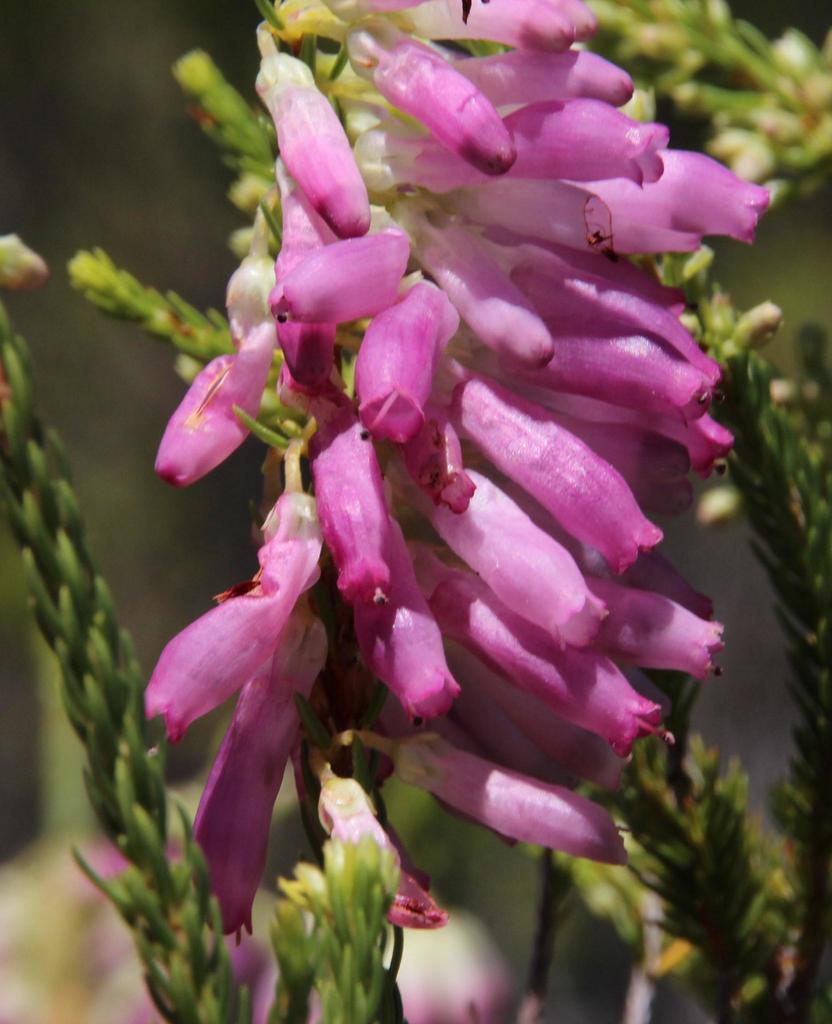
© (c) Tony Rebelo, some rights reserved (CC BY-SA), uploaded by Tony Rebelo (CC-BY-SA)

Description - from Wikipedia

Erica mammosa, the nine-pin heath, is a species of flowering plant in the family Ericaceae, that is naturally restricted to the southwestern corner of the Western Cape, South Africa.
It is a shrub, growing to 2.5 metres (8 feet) tall and broad, that produces masses of flowers in a range of colours from light-pink to orange to bright red.
The species name mammosa means "with breasts" and refers to the udder-like tubular shape of the flowers.
This plant is found as an ornamental garden subject.
In the UK it has gained the Royal Horticultural Society's Award of Garden Merit. Like many heathers it is a calcifuge, meaning that it must be grown in an acidic soil. It requires a sunny, sheltered spot with sharp drainage. It tolerates low temperatures down to 0 °C (32 °F), but will not stand freezing.

Gallery


== References ==

Read more here

Species Characteristics

Wildlife supported

Birds Birds
Sunbirds Sunbirds

Social features

Attractive Attractive

Habitats

Near water Near water

Aspect

Sun Sun

Plant types

Shrub Shrub
Flowering Period
  • Purple
  • Red
  • White
  • Yellow
No flowering data available

Propagation

By Seed

Seeds can be harvested when they start to fall out of the flowers naturally. To harvest, cut off the older flowers before they shed their seeds, dry them, and extract the seeds by rubbing the dried flowers against a rough surface; clean them using graduated sieves. Sow seeds in autumn (April to May) into a tray not less than 100 mm deep. The sowing medium should be well drained and acidic, levelled and firmed down. Seeds should be sown evenly to prevent damping off and fungal diseases. This can be achieved by mixing the seeds with fine sand before sowing. Seeds can be smoke treated before or after sowing. To ensure maximum germination, night and day temperature fluctuation should be approx. 8-10°C (16 hours of night) and 15-25°C (8 hours of day), the same as those that occur in the Western Cape during autumn.

By Cutting

Cuttings are easiest. Take semi-hardwood tip or heel cuttings of 5 cm in Feb to April, treat with rooting hormone, place in half crushed pine bark half sand/polystyrene at about 23 degrees Celcius. Harvests seeds when naturally falling out, but cut flowers before they fall and rub out seeds when dry. Sow seeds evenly (mix in fine sand beforehand) in patted down sand in autumn Smoke treat before or after sowing.

Nursery availability

No nursery stock found.

Start planning your restoration garden