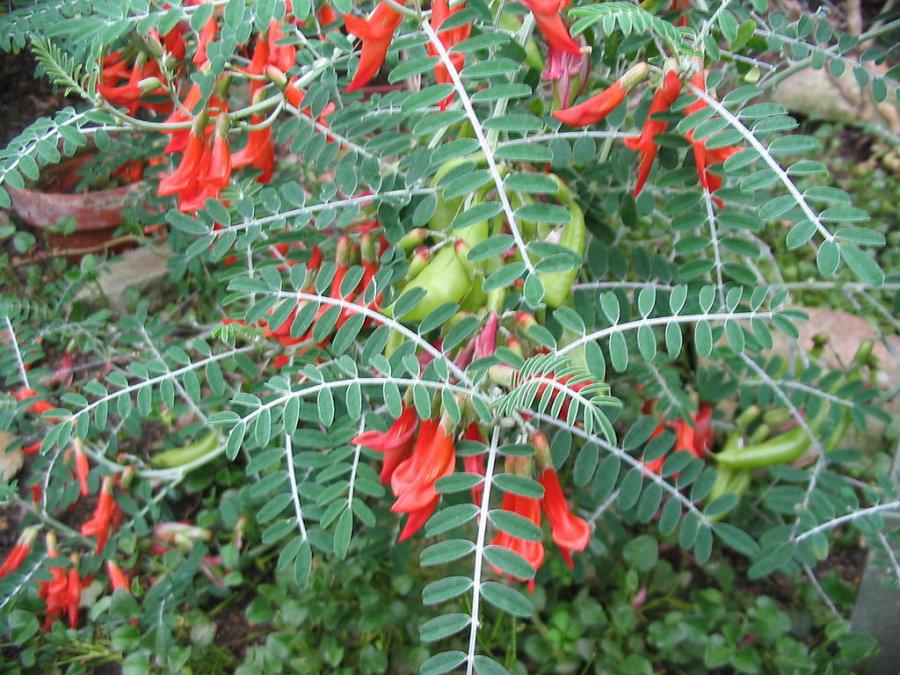
 By Christian Hummert (Ixitixel) - Own work, CC BY-SA 3.0, https://commons.wikimedia.org/w/index.php?curid=6600896 (https://upload.wikimedia.org/wikipedia/commons/d/d8/Sutherlandia_frutescens_1.jpg)
Cancer Bush
Lessertia frutescens
Animal-friendly
Growth features
Aspect
Plant types
Succession
Flowering
- orange
- red
This is a small bush growing up to about 1m high. It is native to dry parts of southern Africa, preferring full sun but tolerant of a wide variety of soil types. It is a tough plant, hardy, fast growing and drought tolerant but short lived. Seeds germinate readily in around 2 to 3 weeks and established plants self-seed readily. Seedlings may be vulnerable to damping off, but provided it is in well drained soil, it grows readily and is not very vulnerable to pests.
Traditional uses include an infusion made from the leaves is a traditional remedy said to treat fever, chicken pox, flu, rheumatism, hemorrhoids, diarrhea, and stomach and liver problems. Although some animals studies have been conducted on the putative pharmacology of S. frutescens, there is no good evidence relating to its safety and efficacy. This plant has been promoted as useful to people with HIV/AIDS, but there is no evidence of benefit, and it interacts adversely with conventional drugs used, such as antiretroviral drugs.
Leaves and stems are used for treating cancer, HIV/AIDS, colds and flu, arthritis, chicken pox, eye problems, digestive and urinary tract issues. Also used for washing of wounds and an appetite stimulant.
Also known as Sutherlandia frutescens, Colutea frutescens, Sutherlandia humilis