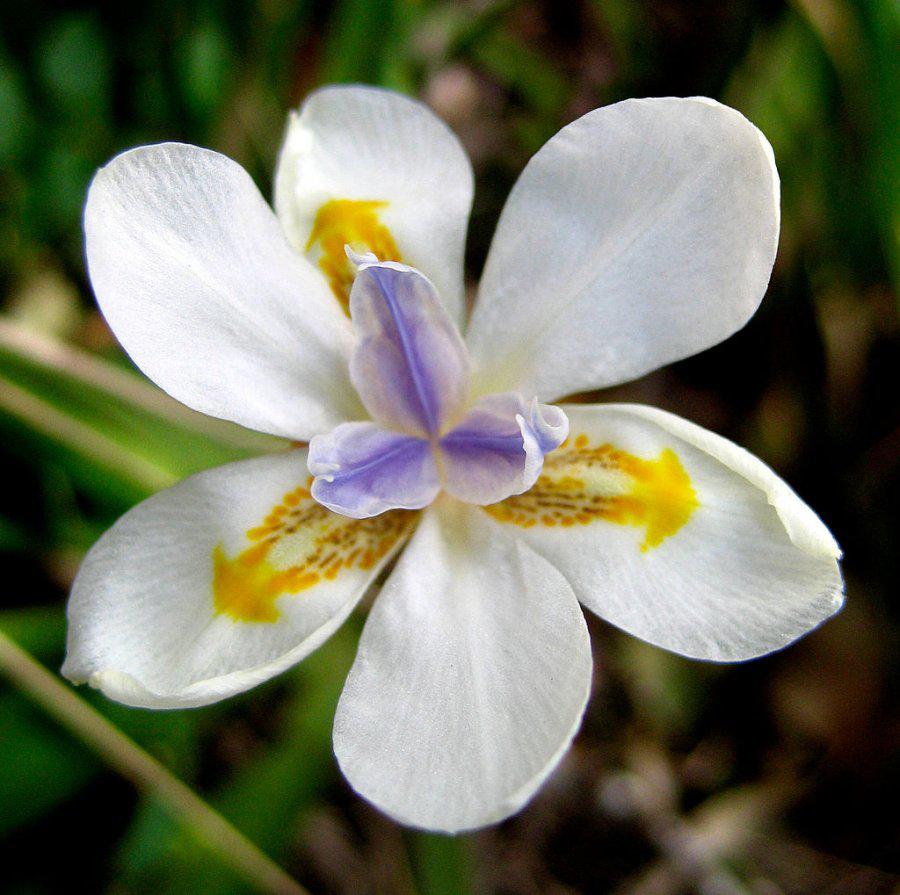
 By Amada44 (Own work) [Public domain], via Wikimedia Commons (https://upload.wikimedia.org/wikipedia/commons/c/cc/Dietes_iridioides_001.jpg)
Small Fortnight Lily
Dietes iridioides
Animal-friendly
Growth features
Social features
Plant types
Soils
Flowering
- white
This iris has sword shaped evergreen dark green leaves arranged in a fan. It has a white flower with yellow and violet towards the centre. Dietes irioides flowers from spring through to summer but the flower lasts for only one morning. Heavy seed pods droop towards the ground. It is not common in gardens but considered a good plant for garden cultivation.
Formerly known as Moraea vegeta and often confused with Dietes grandiflora which has larger flowers and darker colouring.
Pollinated by bees and other insects, but also self-pollinates. It grows well in large clumps in sun or semi-shade and self seeds easily. Plant seeds in spring or divide rhizome clumps up.
These tough, drought-resistant plants will thrive in semi-shade as well as full sun, often where little else will grow. Dietes iridioides will tolerate both wind and frost, and seeds itself freely.
Medicinal uses include treatment for dysentery, childbirth, hypertension and first menstruation, and also used as a goat tonic. It is also an important part of cultural practices, as described in plantZA: "Some people call this the rain iris as they believe that flowering of this plant presages rain...(and) some African cultures believe that, if you have been to a funeral or entered a house with a corpse, you must chew the rhizome and spit on the ground to take the bad luck away. And if you do not chew the rhizome, an immediate member of your family is going to die."
Also known as African iris and Fortnight lily