 Paul Hoekman
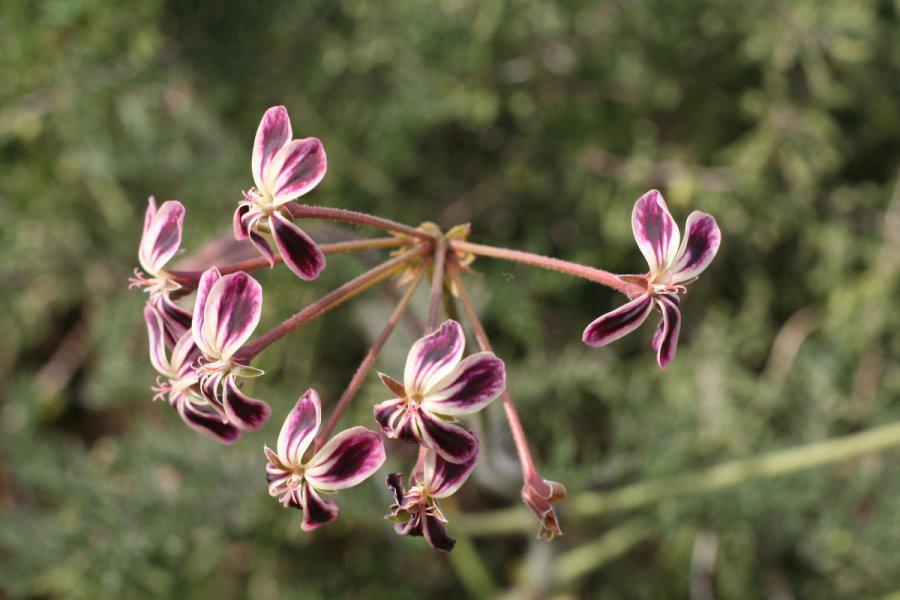
Night-scented Pelargonium
Pelargonium triste
This night-scented pelargonium, with its attractive carrot-like leaves, makes an interesting addition to collections of Cape plants.
Pelargonium triste is a geophytic species that has a large, subterranean tuber with tuberous roots with a rather cracked, woody bark. The prostrate leaves are produced directly from ground level with minimal stem growth; they are hairy, divided, and softly feathered, resembling the leaves of a carrot plant.
The plant, with its strong clove scent, suggests that it is pollinated by long-tongued pollinators such as moths which are active during the night. The plants survive the dry season by going dormant. Fresh leaves emerge from the tubers when it rains again.
Pelargonium triste has tannin-rich tubers, which are used in Namaqualand for tanning leather a rich, reddish brown colour. Infusions from the tubers are used for treating dysentery and diarrhoea.
These plants are best grown in containers, unless one has a very well drained site with sandy soils. It is best to withhold water during their dormant period, but in the Kirstenbosch pelargonium collection the plants are watered in summer and retain their leaves throughout the year. They are grown in pots with excellent drainage.
Propagation by seed
Seeds can be sown in late summer in a well-drained soil mixture. Germination usually takes place after three weeks. The seedlings should also be potted in a well-drained, composted soil mixture.Propagation by cutting
Pelargonium triste can be grown from cuttings, seed and from dividing clumps of the tubers. Cuttings can be made in autumn or spring. Short stem cuttings can be taken and dipped into rooting hormone to promote the formation of roots. The cuttings are placed in a propagation medium made up of coarse river sand. They are then kept in a cold frame until rooting has taken place. Once rooted, plants are potted into a well-drained, composted mixture for further growth.Tubers can be divided when the plant is not in its active growing stage.