African Blue Sage
Salvia africana-caerulea
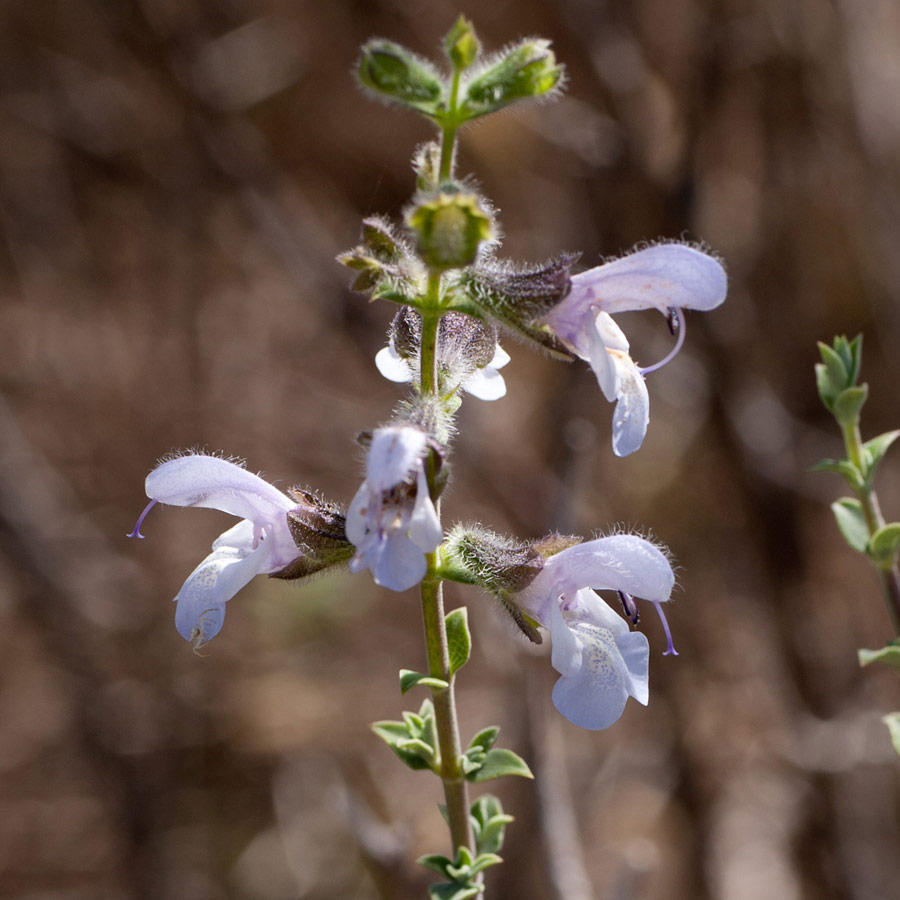 © (c) Carina Lochner, some rights reserved (CC BY-NC), uploaded by Carina Lochner (CC-BY-NC)
Description - from Wikipedia
Salvia africana is a heavy branched aromatic perennial shrub native to the coast of the Cape Provinces of South Africa, found on coastal dunes and in nearby rocky hills up to 600 m elevation. It grows to 60–90 cm, with round grayish stems covered with hairs that release a strong scent when brushed. The leaves are a soft grey-green, lighter on the underside, and elliptical shaped. The inflorescences reach 30 cm long, with 2-6 flowers in each whorl, ranging from pale blue to pale violet or pink.
The species was originally named by Carl Linnaeus in 1753 as Salvia africana caerulea, but as this name has two specific epithets, it is contrary to Article 23.6(c) of the International Code of Nomenclature for algae, fungi, and plants, and has been corrected to Salvia africana. The incorrect form Salvia africana-caerulea will also be found.
Notes
External links
CalPhotos gallery
Read more here
Species Characteristics
Wildlife supported
Tolerances & suitability
Growth features
Propagation
By Seed
Seed can be sown in autumn or spring to early summer. Use well-drained soil and keep moist. As soon as the seedlings are strong enough to handle, transfer them to a single pot. After a few more weeks they are ready for planting into the garden. The seedlings respond well to organic fertilizer and pinching the tips will encourage bushy, vigorous growth and more flowers.