Fynbos Corridor Collaboration

Hairless Brightfig

Lampranthus glaucus
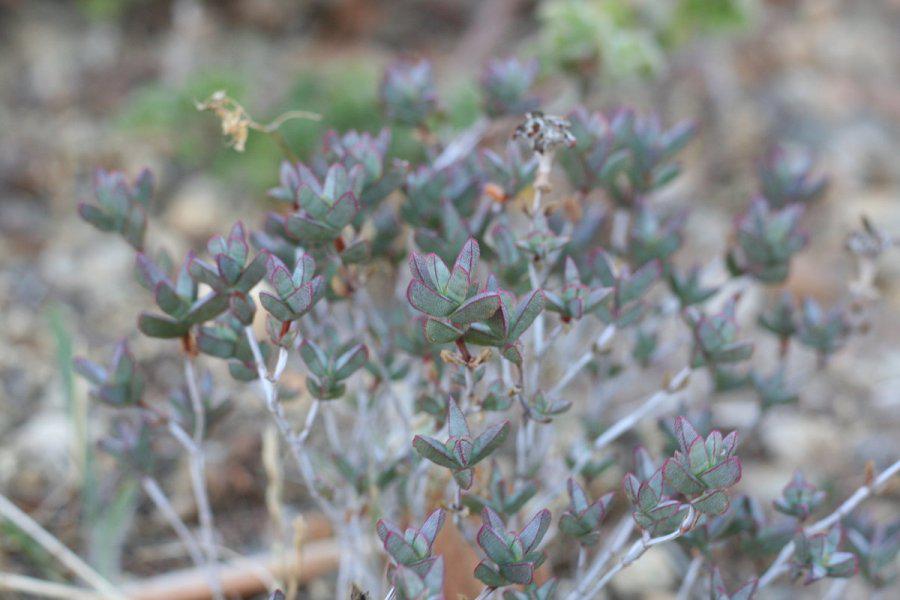
© Guus Hoekman (None)

Description - from Wikipedia

Lampranthus glaucus is a plant species in the genus Lampranthus native to South Africa and naturalized in gardens all around the world.
The compact and rounded shrub typically grows to a height of 0.1 to 0.3 metres (0.3 to 1.0 ft). It has succulent leaves and produces masses of orange to yellow flowers from August to October. It is considered an invasive introduced species in Western Australia and New Zealand. The flowers open completely in the sun and are called noon flowers. It grows well in well-drained sandy soils and poorly in clay soils.
The species was first formally described as Mesembryanthemum glaucum by the botanist Carl Linnaeus in 1753 in his work Species Plantarum. It was subsequently reclassified by Nicholas Edward Brown in 1930 in the journal Gardeners' Chronicle. Many other synonyms exist including; Lampranthus glaucoides, Lampranthus aurantiacus, Mesembryanthemum aurantium and Mesembryanthemum aurantiacum.


== References ==

Read more here

Species Characteristics

Wildlife supported

Bees Bees
Monkey beetles Monkey beetles

Tolerances & suitability

Drought-resistant Drought-resistant
Good potplant Good potplant

Growth features

Easy to grow Easy to grow

Propagation

By Seed

''Sow the seeds in a seed pan during the cool autumn months of the year. In the southern hemisphere these are March to May. Ensure that the seed pans are adequately drained. Sow the seeds in a mixture of sand and loam. On top of this mixture, sprinkle a thin layer of sand, 5 mm deep. It is into this sand that the seeds are sown no deeper than about 2 mm below the soil surface. If sown too deep the seeds will be smothered and will probably not germinate. Keep the area free of weeds, and water with a fine mist spray every second day. Ensure that the pans are in a sunny position. Plant the seedlings out in November of the same year when they are approximately 5 cm high.''

By Cutting

Cuttings can be taken from healthy stems. Take cuttings that are about 8cm long and place in sandy soil. Water until the water runs through the pot once per week and wait for roots to fill the plug before you plant up into a bigger pot. Plat out once it has established a few healthy stems more than 5cm high.

Nursery availability

No nursery stock found.

Start planning your restoration garden