Fynbos Corridor Collaboration

Hedwig Storch (https://upload.wikimedia.org/wikipedia/commons/d/d0/Monte_%28Funchal%29_IMG_2045.JPG)

Cape-Pondweed

Aponogeton distachyos

Animal-friendly

Supports bees Supports bees

Growth features

Easy to grow Easy to grow
Fast-growing Fast-growing

Social features

Edible Edible
Fragrant Fragrant

Habitats

Near water Near water
In water In water

Aspect

Sun Sun
Semi-shade Semi-shade

Plant types

Bulb Bulb

Flowering

  • white
Jun Jul Aug Sep Oct Nov Dec

This is a well known local delicacy for the cold winter months. It has become so popular that many commercial plantings have been made in ponds around the western Cape. Cooked with onions, mutton or lamb and a few leaves of the local sorrel/suring (Oxalis pes-caprae) it makes a delicious stew.

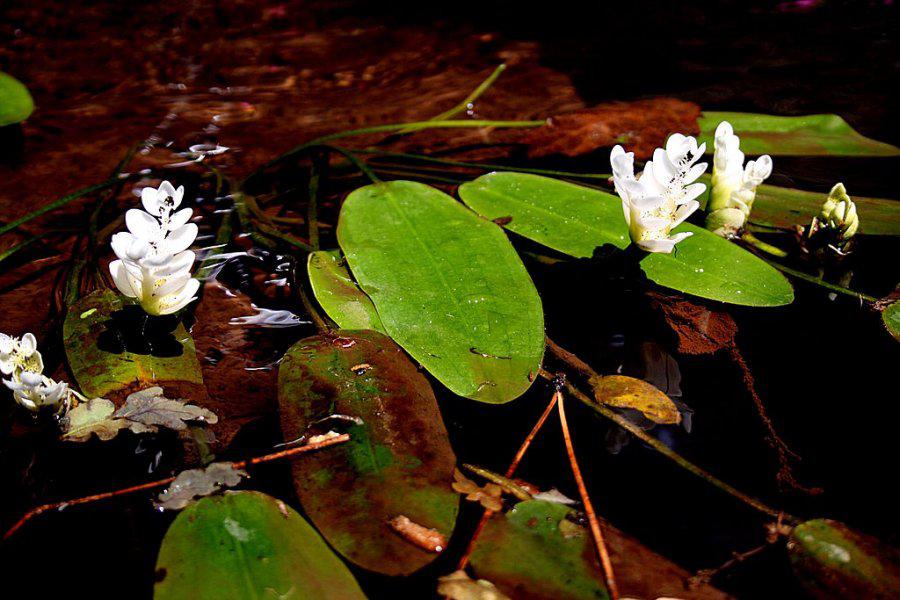
Waterblommetjies flower in profusion during winter and spring. Large areas of water in the Western Cape are covered with their sweetly scented, white flowers.

Propagation by seed

The seed of Aponogeton germinates freely on the water surface. The young seedlings can be collected and grown on. They will reach flowering size in one season given ideal conditions. Dormant tubers are sometimes available from plant nurseries in the Cape.

Propagation by cutting

Divide the clumps of tubers in summer. Plant new tubers in a pot with loam and place it in shallow water until the plants starts growing strong. The pot can then slowly be moved to deeper water in the sun. Plants can also be planted directly into the pond. Waterblommetjies are vigorous growers that will seed themselves, and in some areas might even need to be controlled.

Sources and references

Start planning your restoration garden