Fynbos Corridor Collaboration

Capeflats Conebush

Leucadendron levisanus

Animal-friendly

Supports butterflies Supports butterflies
Supports bees Supports bees

Tolerances & suitability

Good potplant Good potplant

Habitats

Near water Near water

Aspect

Sun Sun

Plant types

Shrub Shrub

Flowering

  • yellow
Sep Oct Nov

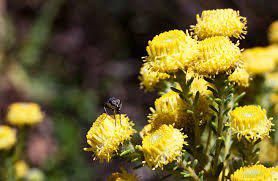
Leucadendron levisanus is an erect, 2 m tall, well-branched shrub developing from a single stem at ground level. The slender branches bear very small oblanceolate to spoon-shaped leaves. Leucadendrons are dioecious, i.e. separate male and female plants. The male flowerhead bears bright yellow flowers with a faint sweet odour. These flowers can cover the entire plant to produce a beautiful flowering display in spring and early summer. The mature female flowerhead forms globose cones. These cones retain the seed, a small, hard-shelled nut, 3-4 mm long, until environmental conditions are conducive for the seed to be released. This normally happens after a fire. This species first flowers after 3 years and is mature at the age of 10 years and senesces at 30 years.

Propagation by cutting

Leucadendron levisanus is reproduced from tip and heel cuttings taken in spring and autumn. Cuttings are rooted in a 50:50 mixture of fine, milled pine bark and polystyrene balls. Applying a rooting hormone will stimulate rooting. Rooting can take place from 6 weeks onwards. Rooted cuttings are removed from the mist benches and hardened off for 3 weeks before being potted. Rooting can only take place if you have sufficient underfloor heating and mist benches set up in a good propagation greenhouse. The rooted cuttings are potted in a soil medium made for fynbos plants. A suitable mixture would consist of sand, composted pine bark and loam or topsoil. The potted cuttings should be grown in a well-ventilated and lit area and should be watered in the morning. They could be fed every second week with an organic-based, seaweed fertilizer.

Sources and references

Start planning your restoration garden