Cluster Spiderhead
Serruria glomerata
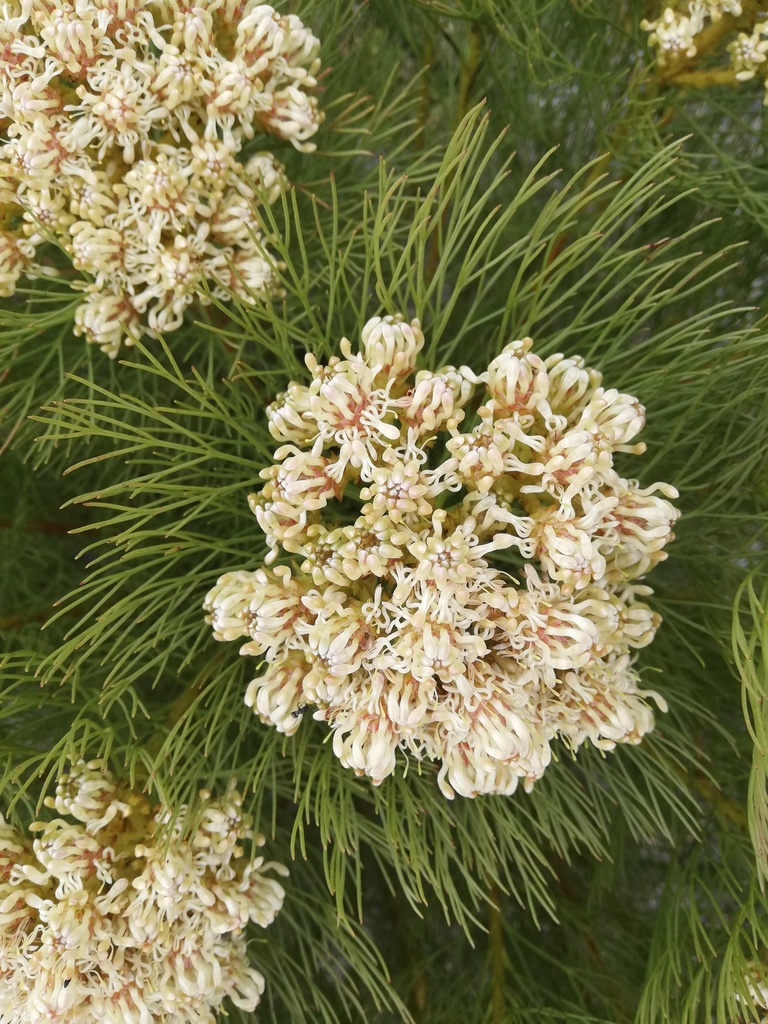 © (c) Joti Daya, some rights reserved (CC BY-NC), uploaded by Joti Daya (CC-BY-NC)
Description - from Wikipedia
Serruria glomerata, the cluster spiderhead, is a flower-bearing shrub that belongs to the genus Serruria and forms part of the fynbos. The plant is native to the Western Cape, occurring on the Cape Flats and Cape Peninsula. The shrub is erect and grows only 40 cm tall and bears flowers from August to October.
Fire destroys the plant but the seeds survive. Two months after flowering, the fruit falls off and ants disperse the seeds. They store the seeds in their nests. The plant is unisexual. Pollination takes place through the action of insects. The plant grows in sandy soil at altitudes of 0–330 m.
In Afrikaans it is known as trosspinnekopbos.
References
External links
Media related to Serruria glomerata at Wikimedia Commons
"Threatened Species Programme | SANBI Red List of South African Plants". redlist.sanbi.org. Retrieved 14 January 2022.
"Serruria glomerata (Cluster spiderhead)". biodiversityexplorer.info. Retrieved 14 January 2022.
"Serruria glomerata | PlantZAfrica". pza.sanbi.org. Retrieved 14 January 2022.
"Curly Spiderheads". proteaatlas.org.za. Retrieved 14 January 2022.
Read more here
Species Characteristics
Wildlife supported
Tolerances & suitability
Growth features
Social features
Aspect
Plant types
Soils
- Cream
- White
Propagation
By Seed
By Cutting
Grow Serruria glomerata seedlings and cuttings in a well-drained (sandy), acidic soil mix suitable for fynbos, e.g. a mixture of river sand, composted pine bark and loam. Do not feed with strong fertiliser, preferably feed with more frequent small doses of an organic liquid fertiliser. Plant out into the garden in autumn to allow the young plant to become established during the cool, wet winter before the onset of the hot, dry summer.