Red Mallow
Pelargonium fulgidum
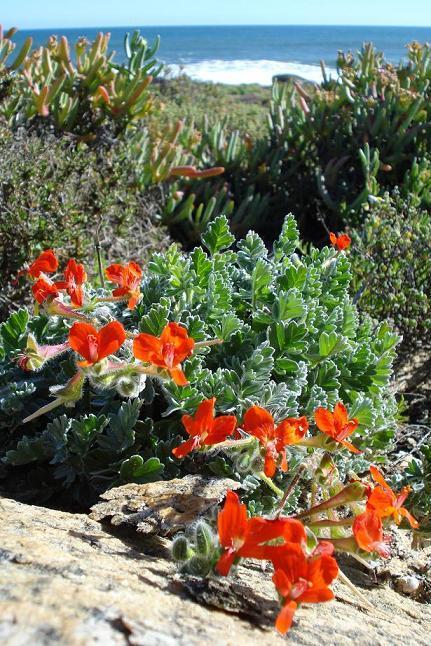 © (c) juddkirkel, some rights reserved (CC BY-NC) (CC-BY-NC)
Description
No description available.
Read more here
Species Characteristics
Wildlife supported
Sunbirds
Sunbirds
Tolerances & suitability
Drought-resistant
Drought-resistant
Good potplant
Good potplant
Growth features
Easy to grow
Easy to grow
Social features
Edible
Edible
Aspect
Sun
Sun
Soils
Flowering Period
Jun
Jul
Aug
Sep
Oct
Nov
Dec
Propagation
By Seed
To propagate P. Fulgidum from a cutting one should take cuttings from healthy, non-flowering stems during autumn (April to May) when the plant starts putting out leaves. Aim for a cutting of 10 - 15 cm taken just below the leaf node. Use a sharp knife and make a diagonal cut at the base of the stem. Any lower leaves should be removed and dip the cutting into rooting hormones to help stimulate growth. The cutting should be left to dry for a day or two whereafter it can be inserted into a tray filler with river sand. The tray should be kept cool, so a shaded area will do the trick, and should remain damp but not wet. In around four weeks you will have roots growing from the cuttings. Next, one should pot the cuttings into a well-drained, sandy medium. They should be placed in a sunny area and watered every third day. They will soon form a strong root-ball which indicates their readiness to move to the garden.
By Cutting
Seeds pods start forming after the flowers have faded. When the pods turn brown and dry the seeds will be ready for harvesting. Pods should be carefully snipped after which seeds should be gently extracted. Ensure seeds are dry before storing. Early spring is the best time for sowing P. Fulgidum seeds. Fill a few seed trays with a well-drained potting mix and press the seeds gently onto the surface after which they should be covered with a thin layer of soil. Soil should be kept consistently moist, but not wet, and the tray should be kept in a warm and bright environment. Seedlings will appear within 2 - 4 weeks. Once a few sets of true leaves have grown, the plants can be carefully repotted into their individual pots. Take care not to disturb the roots during the repotting process.
Nursery availability
No nursery stock found.