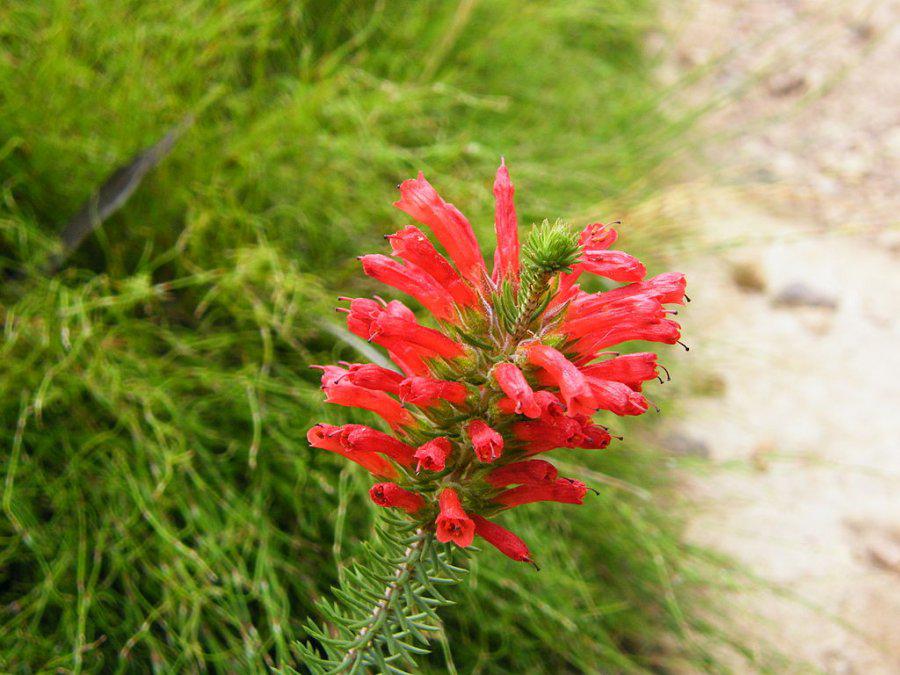
 Andrew massyn [CC BY-SA 3.0 (https://creativecommons.org/licenses/by-sa/3.0) or GFDL (http://www.gnu.org/copyleft/fdl.html)], from Wikimedia Commons (https://upload.wikimedia.org/wikipedia/commons/4/45/Erica_abietna_subsp._abietna_%281%29.jpg)
Peninsula Heath complex
Erica abietina
Tolerances & suitability
Good potplant
Good potplant
Growth features
Easy to grow
Easy to grow
This heath shrub species has a variety of flower colours and subspecies that are unique to particular locations across the region, predominantly in Peninsula Sandstone Fynbos. Some are well protected and therefore classified as Least Concern, while others are not well protected and very localised and classified as critically endangered. It grows well in garden settings. It attracts sunbirds and the butterfly Aeropetes tulbaghia.
It prefers rockeries and slanting ground in full sun with other Fynbos such as ericas, buchus, brunias, and restios.